GootLoader
- 173
- Global rank
- 181
- Month rank
- 172
- Week rank
GootLoader is an initial-access-as-a-service malware that operates by delivering the GootKit banking trojan and other malicious payloads. It utilizes techniques such as fileless execution and process injection to avoid detection. The malware is often distributed through SEO poisoning and compromised websites, deceiving users into downloading infected files.
- Loader
- Type
- Unknown
- Origin
- 1 November, 2020
- First seen
- 23 May, 2026
- Last seen
How to analyze GootLoader with ANY.RUN
IOCs
IP addresses
- 2.16.164.49
- 40.126.32.76
- 48.209.138.168
- 172.211.123.250
- 23.59.18.102
- 172.211.123.248
- 74.179.77.204
- 2.16.164.9
- 2.16.204.141
- 48.192.1.64
- 88.221.169.152
- 74.178.240.51
- 20.190.160.128
- 48.192.1.65
- 23.52.181.212
- 48.209.138.189
- 23.216.77.6
- 48.209.133.15
- 40.126.31.131
- 135.233.95.144
Hashes
- 96ad1146eb96877eab5942ae0736b82d8b5e2039a80d3d6932665c1a4c87dcf7
- f5a5a6263a7cc52c80421be7f39e6656db7d546f9921bd460670e6d24e82312a
- f49b515eedeed1abe391bc32f15ce43d3582cb6c41ff944fa9c79f476d5824ba
- 43d7df1433fed126479f828e33c99b0254e7c6500b04f0280d9497f22e0c7fe9
- b4c7fd4671488eef445504f042095b5375fae91d18b0384cc26eed2782880536
- ccd7a1199eae9beca4143ae9b4af254ab910e24052431c79429d6f495935665a
- bc6534d82953b443f84ab58f82456dad523801b5cc8e90afe20cf6581d018739
- 61fd6f23b6cfcd45bf86ff792e3d150a2e4088a9ad6270d2319ed2f325f51a31
- 1c3ef49f42f75b2cf547e73f96eae0091a37785c3dbd547c1ef5d68ab2c1ad82
- 88df1ea9c0df69b9209657f43dde496e97bb985cbf8f723a55b505ddeb844600
- b429e25e7813a9e2b90dcec11d9cb5287751246128dd6c76a7349774829c5554
- 2a1f2357b5356b5cba0f0a624465968b23dd920c679d82e8cdba215b192a5ef2
- 2d1c8473b2f6ea2a749fd51a03b94d4db3c5cc0144c3057c4b134d1ed6f3c202
- ffb2248c1d9862803d7f1df4aa6c1217a41c37ba447b52794d1ec9c0cffac3cb
- 9c05d45a2237afa3f78674ce9c38088689995b4bb36d8ef4ed5cd442df1e35c7
- 6be59ac2668c89fd5bd521b88ab9ebf6af182e5f3b31063ee3accba6758b3e1a
- 1c4b1dcc6f2a72e6dda9f8e37ffa4709a308ab0767433d1053154c3599edad34
- ab5311cdf97c83024098cf54411b87251a3d4b2034bd2b2ba54f72edab36d41b
- fee6bacc69f954f1c9ab7a1399a1e1b43836ed2c182784e9e6b536e3248fd2e6
- c4c1aa5a01351002b9a2cf08498999877bd6fd4c0df07adcd90e9cc1f4e5c524
Domains
- www.microsoft.com
- settings-win.data.microsoft.com
- fe3cr.delivery.mp.microsoft.com
- nexusrules.officeapps.live.com
- www.bing.com
- crl.microsoft.com
- self.events.data.microsoft.com
- slscr.update.microsoft.com
- client.wns.windows.com
- google.com
- login.live.com
- activation-v2.sls.microsoft.com
- update.googleapis.com
- ocsp.digicert.com
- pxgcdn.com
- region1.google-analytics.com
- edge.microsoft.com
- edgeassetservice.azureedge.net
- www.googletagmanager.com
- d1rozh26tys225.cloudfront.net
URLs
- http://crl.microsoft.com/pki/crl/products/microoceraut2011_2011_03_22.crl
- http://www.microsoft.com/pkiops/crl/micsecserca2011_2011-10-18.crl
- https://activation-v2.sls.microsoft.com/slactivateproduct/slactivateproduct.asmx?configextension=retail
- https://settings-win.data.microsoft.com/settings/v3.0/wsd/muse?processorclockspeed=3094&flightids=&updateoffereddays=4294967295&branchreadinesslevel=cb&oemmanufacturername=dell&isclouddomainjoined=0&processoridentifier=amd64%20family%2023%20model%201%20stepping%202&sku=48&activationchannel=retail&attrdataver=186&ismdmenrolled=0&processorcores=6&processormodel=amd%20ryzen%205%203500%206-core%20processor&totalphysicalram=6144&primarydisktype=4294967295&flightingbranchname=&chassistypeid=1&oemmodelnumber=dell&systemvolumetotalcapacity=260281&sampleid=95271487&deviceclass=windows.desktop&app=muse&disabledualscan=0&appver=10.0&oemsubmodel=j5cr&locale=en-us&isalwaysonalwaysconnectedcapable=0&ms=0&defaultuserregion=244&updateserviceurl=http%3a%2f%2fneverupdatewindows10.com&osver=10.0.19045.4046.amd64fre.vb_release.191206-1406&os=windows&deviceid=s%3abad99146-31d3-4ec6-a1a4-be76f32ba5d4&deferqualityupdateperiodindays=0&ring=retail&deferfeatureupdateperiodindays=30
- https://login.live.com/rst2.srf
- https://login.live.com/ppsecure/deviceaddcredential.srf
- https://slscr.update.microsoft.com/sls/%7b522d76a4-93e1-47f8-b8ce-07c937ad1a1e%7d/x64/10.0.19045.4046/0?ch=686&l=en-us&p=&pt=0x30&wua=10.0.19041.3996&mk=dell&md=dell
- http://www.microsoft.com/pkiops/crl/microsoft%20update%20signing%20ca%202.3.crl
- http://crl.microsoft.com/pki/crl/products/microoceraut_2010-06-23.crl
- http://www.microsoft.com/pkiops/crl/microsoft%20time-stamp%20pca%202010(1).crl
- http://www.microsoft.com/pkiops/crl/microsoft%20ecc%20product%20root%20certificate%20authority%202018.crl
- http://www.microsoft.com/pkiops/crl/microsoft%20ecc%20update%20signing%20ca%202.3.crl
- http://www.microsoft.com/pkiops/crl/microsoft%20update%20signing%20ca%202.2.crl
- https://fe3cr.delivery.mp.microsoft.com/clientwebservice/ping
- http://www.microsoft.com/pkiops/crl/microsoft%20ecc%20update%20signing%20ca%202.2.crl
- https://slscr.update.microsoft.com/sls/ping
- https://slscr.update.microsoft.com/sls/%7be7a50285-d08d-499d-9ff8-180fdc2332bc%7d/x64/10.0.19045.4046/0?ch=686&l=en-us&p=&pt=0x30&wua=10.0.19041.3996&mk=dell&md=dell
- http://www.microsoft.com/pkiops/crl/microsoft%20update%20signing%20ca%202.1.crl
- http://www.microsoft.com/pkiops/crl/microsoft%20ecc%20update%20signing%20ca%202.1.crl
- http://www.microsoft.com/pkiops/crl/microsoft%20ecc%20update%20secure%20server%20ca%202.1.crl
Last seen at
What is GootLoader malware?
GootLoader is a loader malware initially designed to distribute the GootKit banking trojan. Operated by the UNC2565 threat group, today it functions as initial-access-as-a-service software, catering to cybercriminals who aim to deploy their malware, like Cobalt Strike, on already infected machines. While GootKit has been in circulation since 2014, GootLoader was introduced more recently in 2021. Campaigns involving GootLoader target users visiting hijacked WordPress websites and online forums. Attackers inject malicious code into these pages, deceiving visitors into downloading fake legal documents, which, in reality, turn out to be malicious files designed to infect their systems of GootLoader.
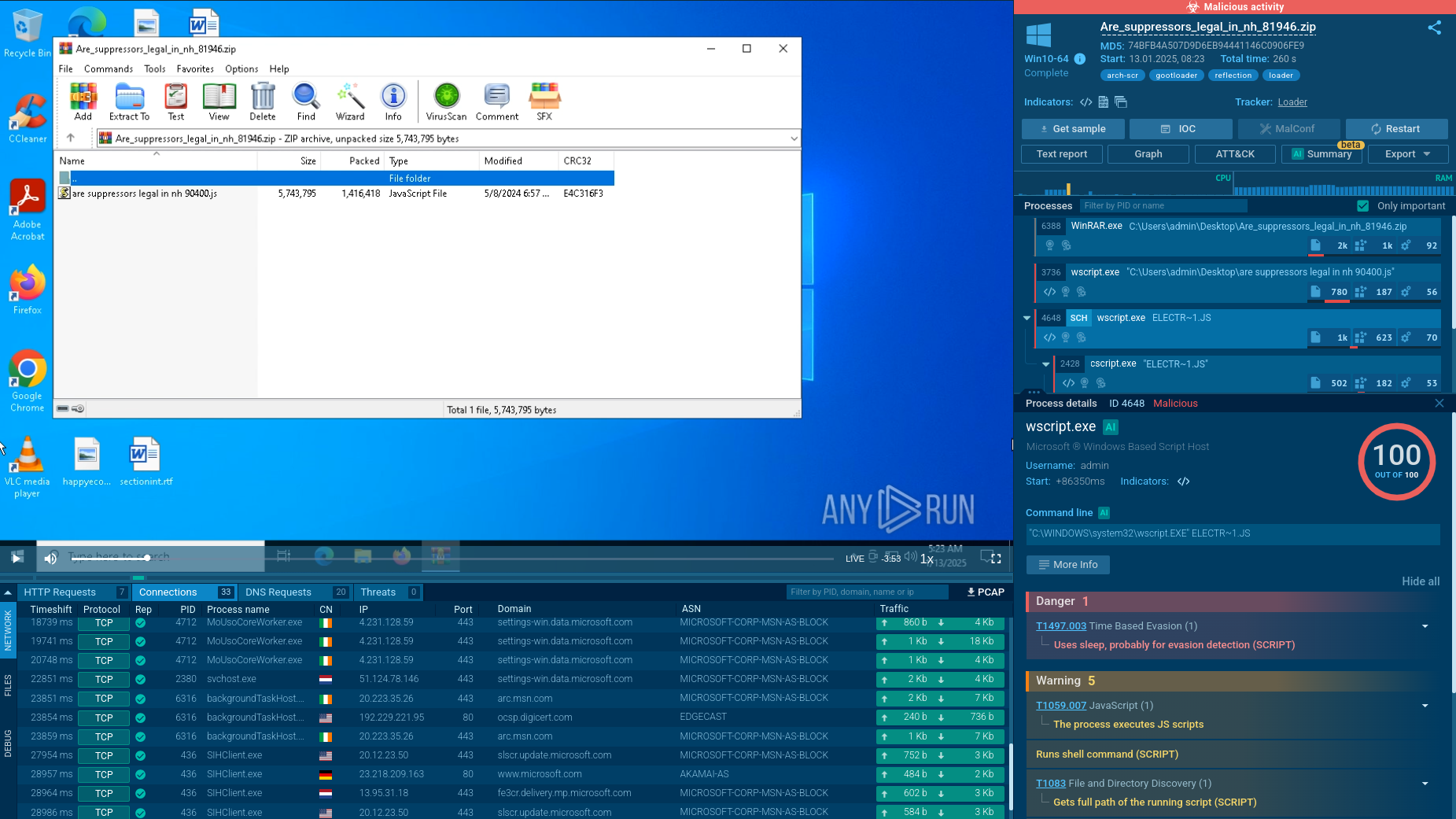
To observe the entire GootLoader infection process, use ANY.RUN’s Interactive Sandbox that provides a safe virtual environment for hands-on analysis of cyber threats.
Check out this sandbox session showing the detonation of a GootLoader sample.
GootLoader malware technical details
GootLoader employs a multi-stage execution process, characterized by several advanced capabilities:
- Memory-only execution: The second stage of GootLoader deploys entirely in memory without writing to disk, making it difficult for traditional antivirus solutions to detect.
- Encryption and obfuscation: The malware utilizes encryption and obfuscation techniques to conceal its activities and avoid detection by security tools.
- External payload fetching: The second-stage payload is typically fetched from an external URL hardcoded in the malware, ensuring that the malicious code is not stored locally on the infected machine. See how you can easily extract hardcoded data with the ANY.RUN sandbox.
- Evasion techniques: GootLoader performs evasion by sleeping, which helps it avoid detection by delaying its activities and blending in with legitimate processes.
- Persistence mechanisms: To ensure it remains active on the infected system, GootLoader modifies the registry and adds an autorun entry, allowing it to execute automatically on system startup.
- Process injection: The malware uses process injection to hijack legitimate Windows utilities with malicious code, further complicating detection and analysis.
- Malware deployment: GootLoader is capable of dropping various types of malware, including GootKit and Cobalt Strike, expanding its potential for damage and data exfiltration.
- Lateral movement: The latest versions of GootLoader are equipped with the ability to move laterally within a network, spreading the infection to other connected devices.
GootLoader execution process
GootLoader's infection process involves several steps. It usually starts when someone visits a compromised website and downloads a malicious archive, often disguised as a legitimate document like a template or contract. This archive typically contains a JavaScript file.
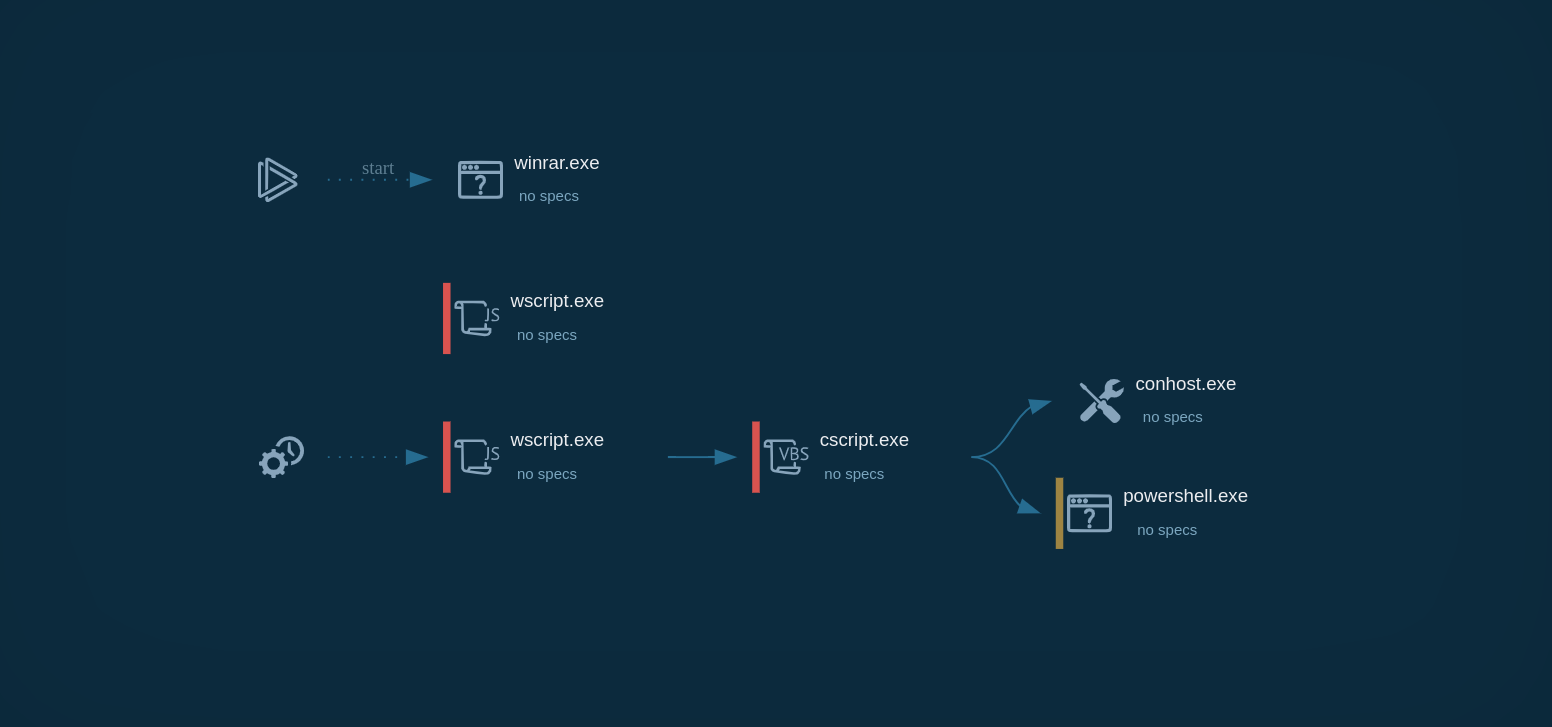
When the file is opened, the first stage of infection begins. It uses Windows Script Host (wscript) to run an obfuscated JavaScript payload. This payload creates a scheduled task to ensure the infection persists, leading to the execution of a second obfuscated JavaScript file stored on the disk.
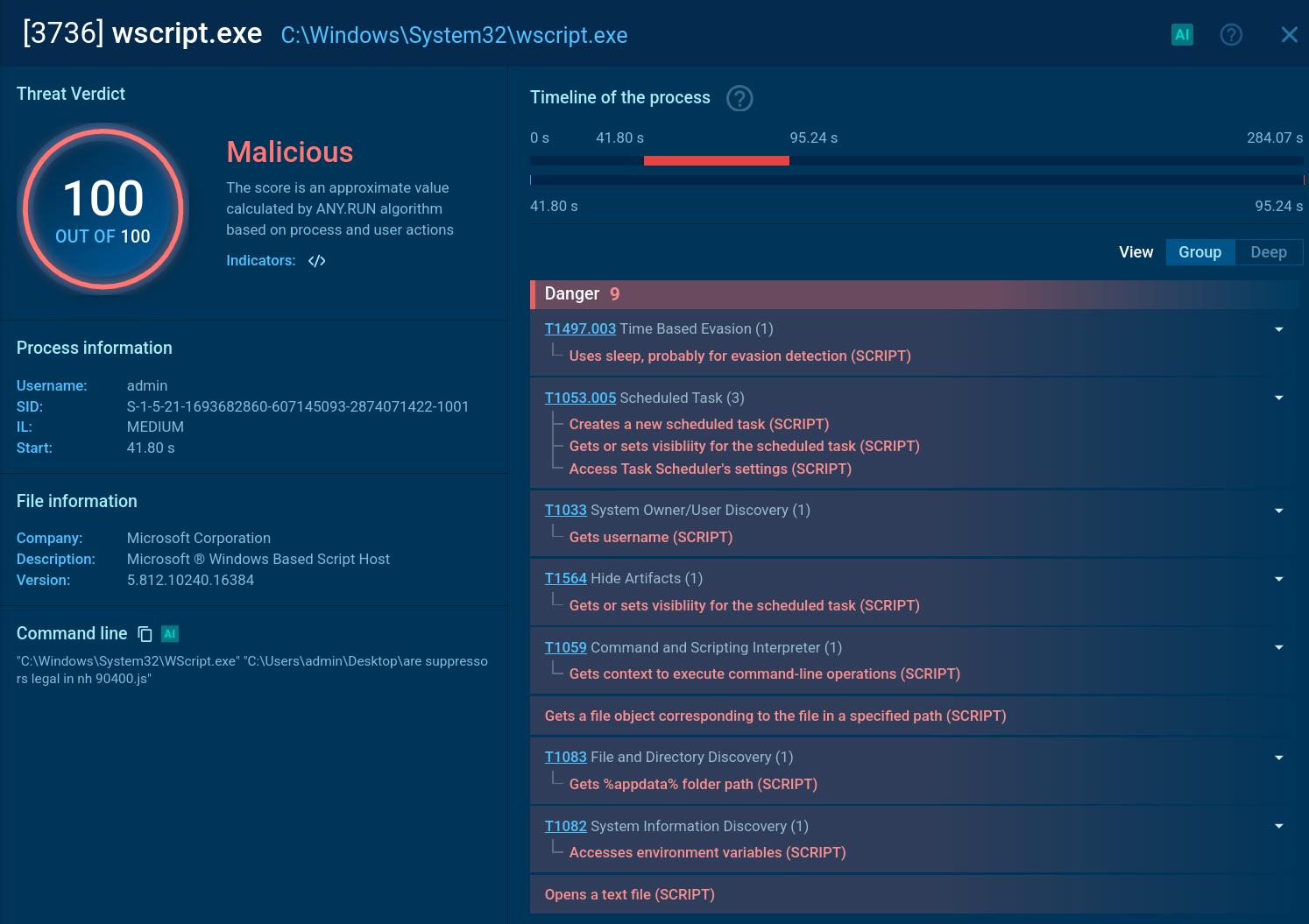
In the second stage, the execution shifts from wscript to cscript, which runs as a child process. This allows a PowerShell script to run, further deobfuscating and executing more malicious code. The PowerShell script collects information from the infected system, such as operating system details, running processes, and environment variables. It can also check the system's location and use sleep commands. The collected information is then compressed, encoded, and sent to a command-and-control (C2) server.
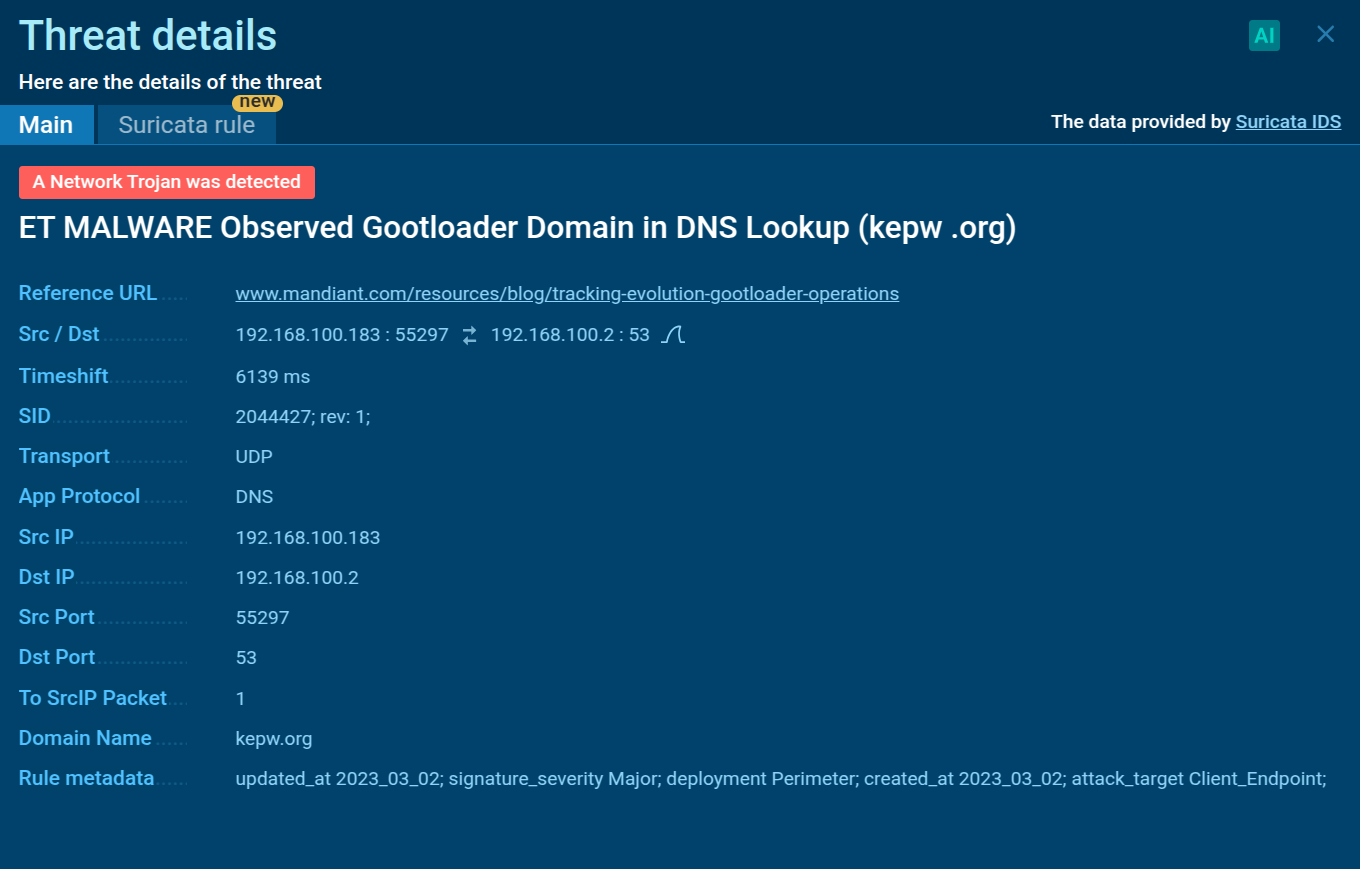
The third stage involves executing additional payloads, which might include components like a Cobalt Strike beacon or other malware. These payloads are often written into Windows Registry keys to ensure they persist and remain active even after the system is rebooted. GootLoader's use of obfuscation techniques makes it hard for traditional security methods to detect. Its sophisticated infection process highlights its effectiveness as a persistent threat to enterprise environments.
Collect Cyber Threat Intelligence on GootLoader
To stay informed about the latest GootLoader samples and attacks, use Threat Intelligence Lookup from ANY.RUN. This tool lets you access a large database filled with findings from millions of malware analyses done in the ANY.RUN sandbox.
With over 40 search options, including IPs, domains, file names, and process details, you can easily find relevant information about threats like GootLoader.
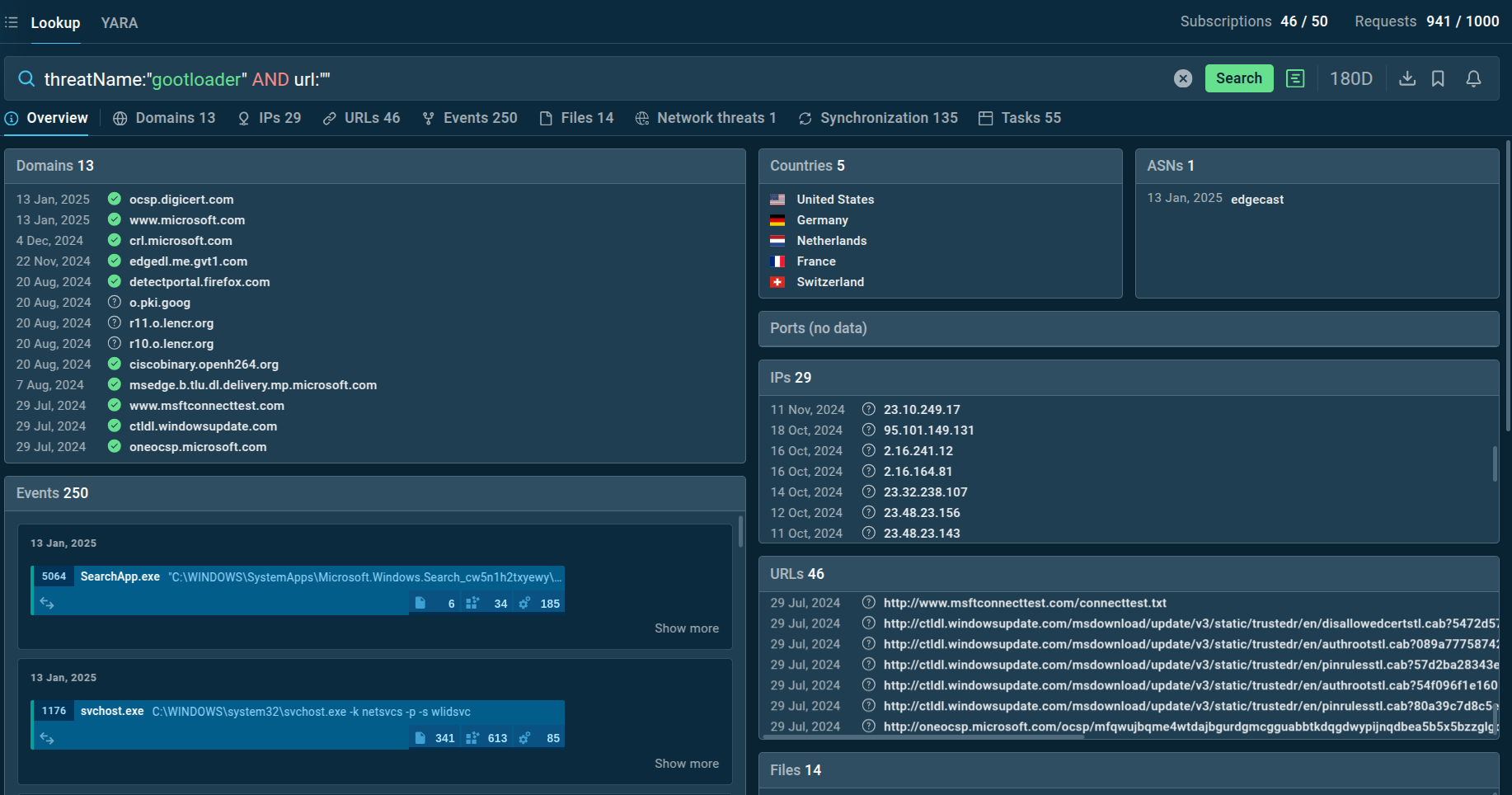
You can search directly by the threat name or use related clues like hash values or network connections. By entering a query like threatName:"GootLoader" AND domain:"", you'll get a list of files, events, domain names, and other data from GootLoader samples. These results, along with sandbox sessions, help you understand the malware's behavior in detail.
GootLoader malware distribution methods
GootLoader uses SEO poisoning to rank attacker-controlled websites high in search results, ensuring that potential victims are more likely to encounter these malicious sites.
Once victims visit these websites, they are prompted to download files such as contract templates and other legal documents that appear legitimate and relevant to them.
These files are usually archives containing .js scripts that serve as the first stage of the GootLoader infection. By disguising malicious files as legitimate documents, the attackers increase the likelihood of successful infection.
Conclusion
GootLoader’s ability to evade detection through memory-only execution, encryption, and process injection makes it a serious threat for traditional security measures. The use of SEO poisoning to distribute the malware further complicates efforts to prevent its spread, as it targets unsuspecting users searching for legitimate information.
To proactively identify and mitigate the risks associated with GootLoader, organizations can use tools such as the interactive malware sandbox from ANY.RUN. This sandbox provides a controlled environment for analyzing suspicious files, allowing security teams to detect and understand the behavior of GootLoader and other malicious software.
Sign up for a free ANY.RUN account to analyze your first file or URL now
Other malware & phishing threats
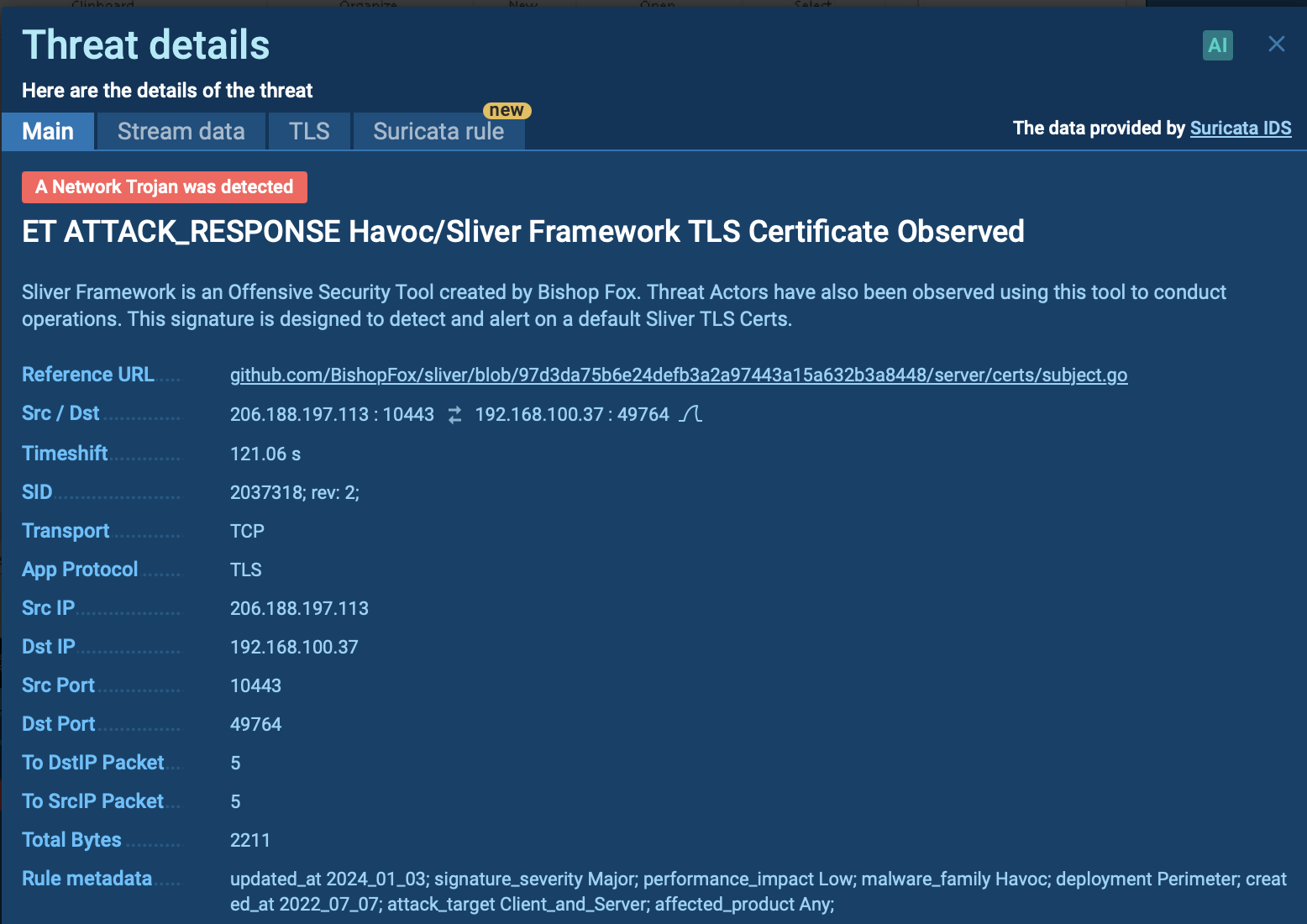 HavocHavoc is an advanced post-exploitation framework used by hackers to take control of a system once they've breached it. With Havoc, attackers can run commands remotely, inject malicious processes, and access sensitive data. It's often used in targeted attacks, allowing cybercriminals to stay hidden in a network while stealing information or launching further attacks. Its flexibility and ability to bypass detection make it a serious threat, especially in environments that rely on traditional security tools.
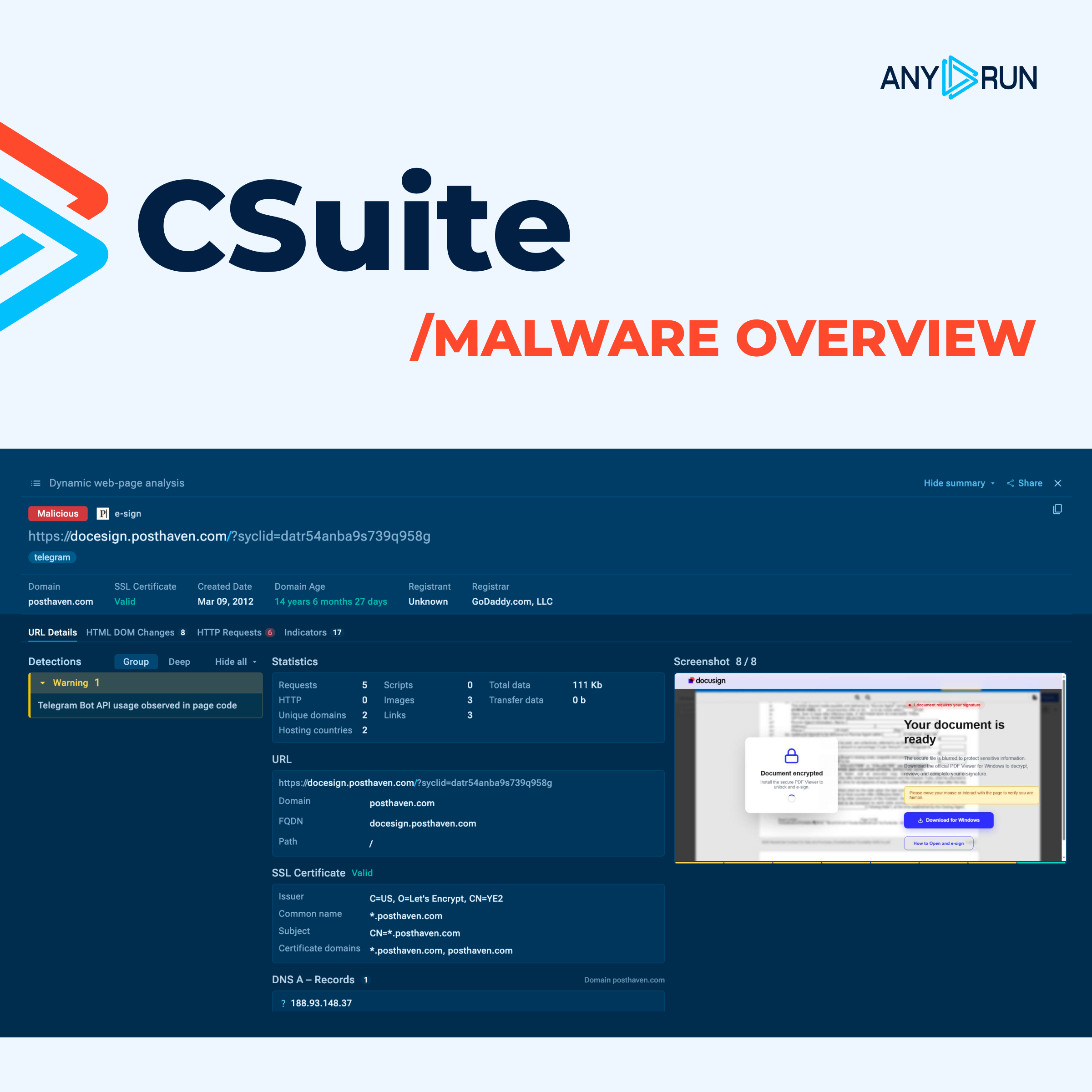 CSuiteCSuite is a financially motivated phishing and remote-access operation that uses counterfeit business document pages, credential-harvesting infrastructure, and legitimate remote-management tools to compromise organizational identities and devices.
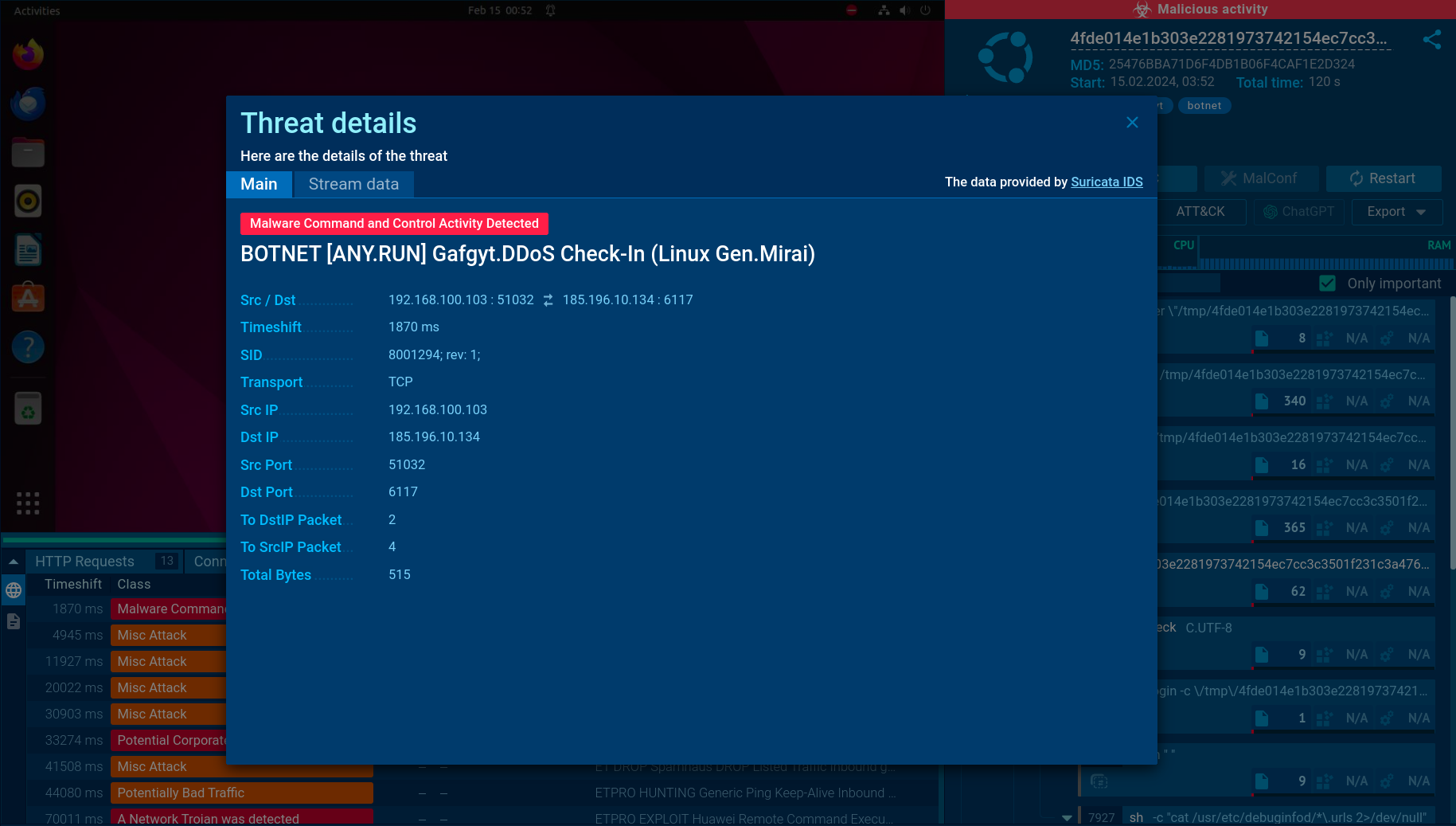 GafgytGafgyt, also known as BASHLITE, is a botnet affecting Internet of Things (IoT) devices and Linux-based systems. The malware aims to compromise and gain control of these devices, often by exploiting weak or default passwords, as well as known vulnerabilities. Gafgyt has been around since 2014 and has evolved into multiple variants, each with its own set of features and capabilities, including the ability to launch distributed denial of service (DDoS) attacks.
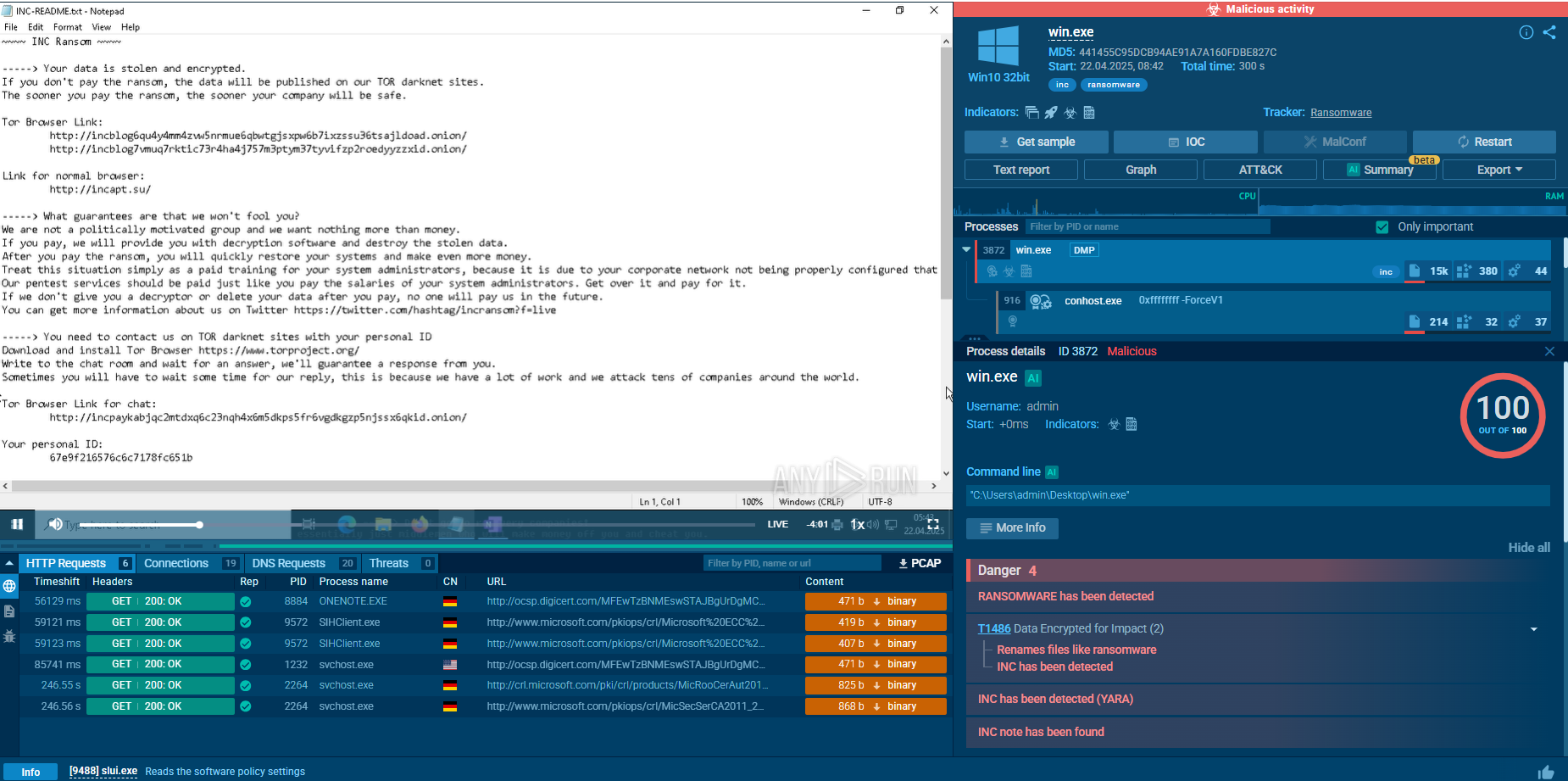 INC RansomwareINC Ransomware is a ransomware-as-a-service (RaaS) spotted in mid-2023. It targets industries like retail, real estate, finance, healthcare, and education, primarily in the U.S. and UK. It encrypts and exfiltrates data demanding a ransom. It employs advanced evasion techniques, destroys backup, and abuses legitimate system tools at all the stages of the kill chain.
 FlawedAmmyyFlawedAmmmyy is a RAT type malware that can be used to perform actions remotely on an infected PC. This malware is well known for being featured in especially large campaigns with wide target demographics.
 LockBitLockBit, a ransomware variant, encrypts data on infected machines, demanding a ransom payment for decryption. Used in targeted attacks, It's a significant risk to organizations.